 Visit Athens Guide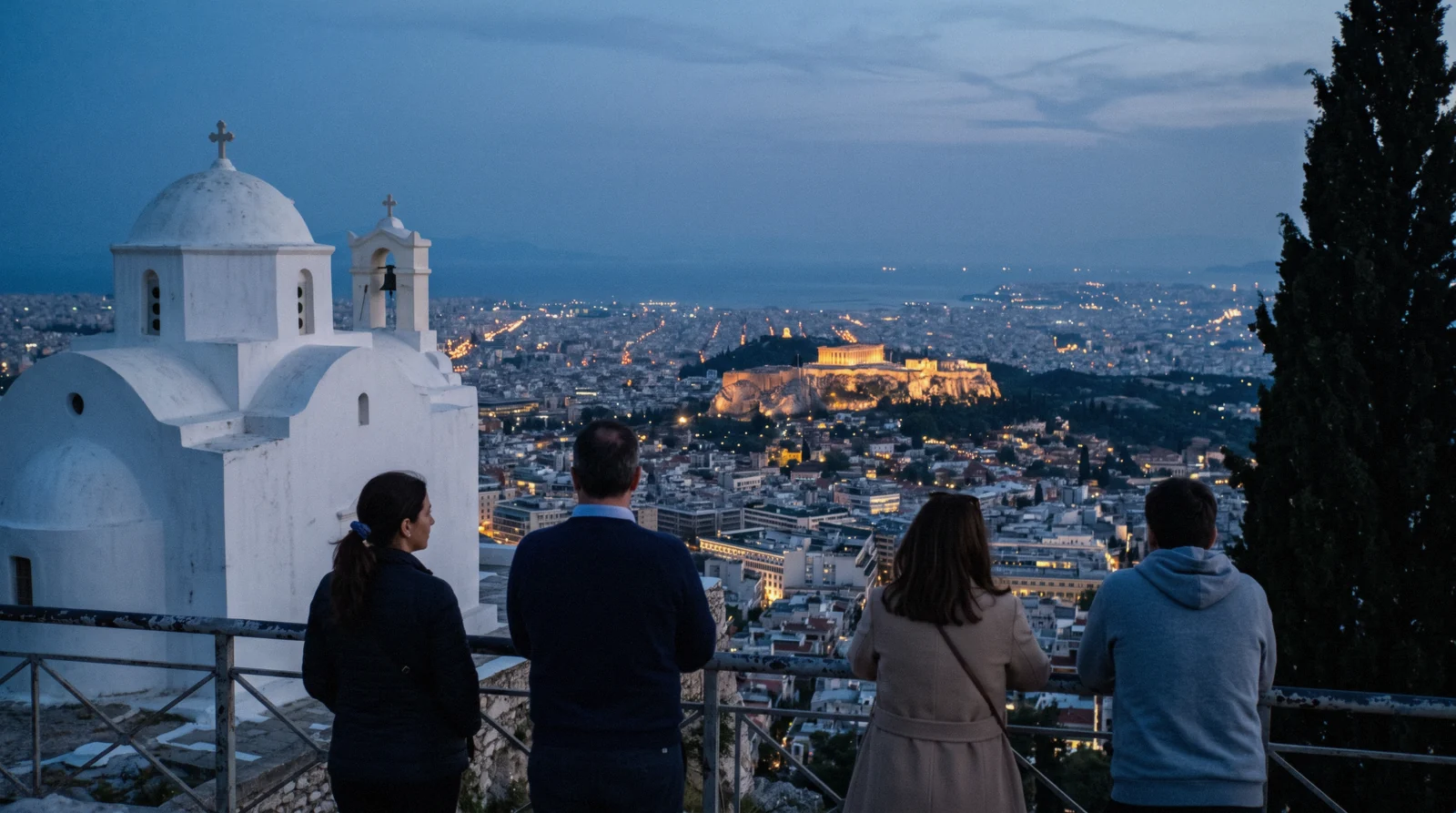
Lycabettus Hill
Lycabettus Hill is the steep cone of limestone north-east of the centre, 277 metres up and the highest point in Athens proper. There is a whitewashed chapel on the summit, a restaurant beside it, an open-air theatre on the far shoulder, and a funicular that climbs the last stretch inside a tunnel. This page has the fares, the walk and the honest comparison with the other hill, as checked in Q3 2026. The wider plan is on the Athens city guide homepage.
Quick answer Fare, walking time, and which hill to choose
The Lycabettus funicular costs €13 return and €10 one way, runs every thirty minutes and takes about three minutes, entirely inside a tunnel. Walking up the footpath is free and takes twenty-five to forty minutes.
Key takeaways
- The ride is in a tunnel, so there is no view from it — the funicular explains what you are and are not paying for.
- One way up and walk down is the value option at €10, and the path down in the evening is the pleasant direction.
- For the postcard of the Parthenon, go to Philopappos Hill instead. This hill gives the wide city panorama; which hill to choose sets them side by side.
- The operator's own page prints two different closing times for the same service, so check the hour on the day rather than trusting any printed figure, ours included.
- It is a twenty-five minute walk from the National Archaeological Museum and about ten minutes from Evangelismos station.
Key facts
Opening hours
| Funicular, daily (operator's box figure) | 09:00–02:30 |
|---|---|
| Funicular, daily (same page, in the prose) | 09:00–01:30 |
| The footpath | —–always open, free |
Closed The operator says the funicular runs 365 days a year; winter evenings may end earlier
Admission
- Adult
- €13 return, €10 one way
- Reduced
- Not published on the operator's page
- Free
- The footpath, at any hour
Planning it
- Time needed
- Not stated; our routing: 3 minutes by funicular, 25 to 40 minutes on foot
- Book ahead
- Optional — walk-up usually fine
- Address
- Base station at Ploutarchou and Aristippou, Kolonaki, 106 76 Athens
What it costs to get up
Fares from the hill's own site on 1 September 2026 — the funicular and the summit restaurant have been run by a catering group since 2002, so this is the operator's page rather than a state one.
| Way up | Price | Time | Note | Book |
|---|---|---|---|---|
| Funicular, return | €13 | About 3 minutes each way | Every 30 minutes; every 10–20 at peak | Official site |
| Funicular, one way | €10 | About 3 minutes | The value option if you walk the other way | Official site |
| The footpath | Free | 25–40 minutes up | Zigzag path through pines from Kolonaki; open at all hours | Official site |
| Night walking tour | From €19 | 2 hours | Covers the centre after dark; the hill is a separate trip | Check Availability |
€13 for six minutes inside a tunnel is the least obviously good value in this guide, and it is still the right purchase for a lot of people: the path is steep, unlit in places and hard work in August. Buying one way up and walking down splits the difference for €10.
Tours that take in the hill
The cards behind the table, with the operator's own rating and review count.
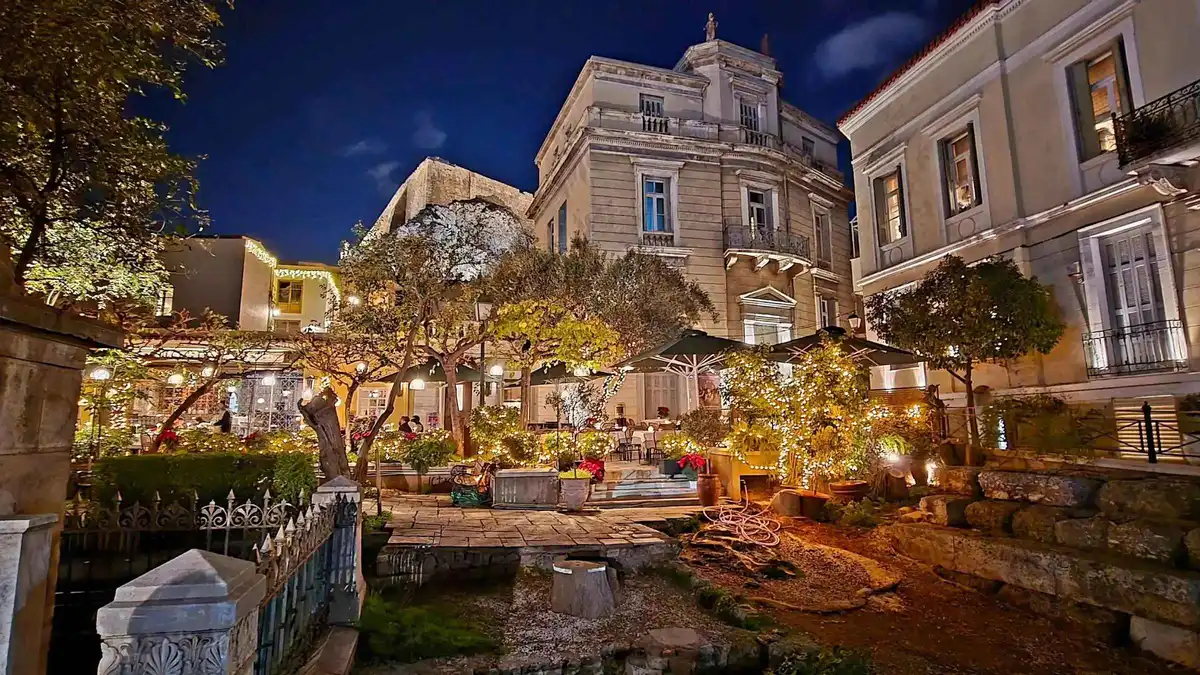 from €18
Athens: Night Walking Tour with Local Guide
Two hours after dark through the historic centre, the Cathedral, Anafiotika, Monastiraki and Plaka, with a local guide and no museum entries.
Check Availability from €78.90
Athens: City Pass with Acropolis, Museums, HoHo & Transport
The Acropolis, the Acropolis Museum and a 48-hour hop-on hop-off bus in one pass, with public transport and an island cruise as options.
Check Availability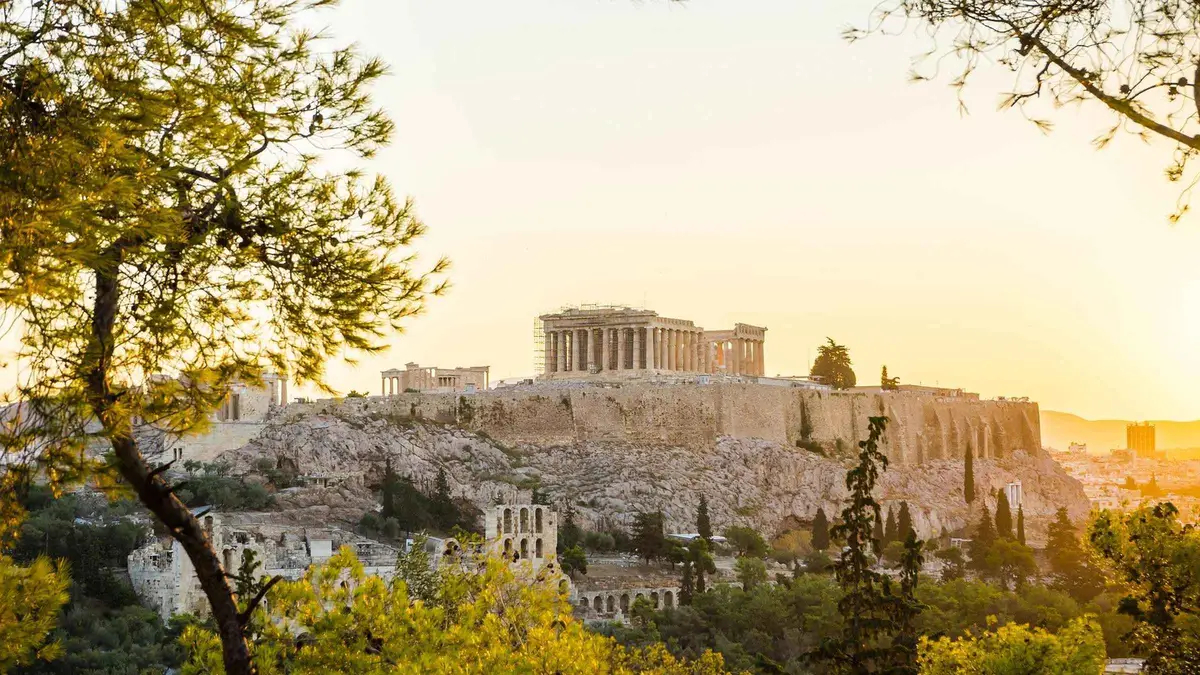 from €42
Athens: Philosophy and Democracy Walking Tour
Three and a half hours on foot through the places where philosophy and democracy actually happened, rather than the places they are commemorated.
Check AvailabilityPrices, ratings and details are the platform's own, checked in Q3 2026; euro figures are the listed prices — the platform bills in your account's currency.
The funicular
A short, strange, sixty-year-old railway that shows you nothing on the way.
What it is
Two cars of thirty-four passengers each, running on a single track that splits at the midpoint so they pass. The line is 210 metres long and the whole run is inside a tunnel cut through the hill, so there is no view from the carriage at all — the view starts when you step out at the top. It opened on 19 April 1965 and was rebuilt mechanically in 2002.
It carries about 300,000 passengers a year.
Where it starts
At the top of Ploutarchou Street where it meets Aristippou, in Kolonaki. The nearest metro is Evangelismos on Line 3, about ten minutes away and uphill. That approach is itself a steep walk through one of the most expensive neighbourhoods in Athens, which surprises people who expected the funicular to start at the bottom of the hill.
When it runs
The operator says 365 days a year, every thirty minutes, more often at peak. On closing time its own page contradicts itself: the prose says the service runs from 09:00 to 01:30 and notes that it may stop earlier in winter, while the box below says 09:00 to 02:30. We print both rather than pick one.
If you are relying on a late descent, ask at the base station on the way up.
What is at the top
A chapel, a terrace, a restaurant and, on the far side, a theatre.
Saint George's chapel
Nineteenth-century, whitewashed, tiny, with a bell that rings out over the city. It is a working church and dress is expected to be reasonable inside; the terraces around it are where everyone stands.
The view, and where to stand
From 277 metres you see the whole basin: the Acropolis below and to the south-west with the Parthenon in silhouette, Piraeus and the sea beyond it, the ridge of Hymettus to the east, and on a clear day as far as Aegina. The Acropolis side is the one to stand on and the hour before sunset is the one to be there, when the rock is lit and the city goes blue.
The restaurant and the café
There is a restaurant and café on the summit run by the same group as the funicular, with the best terrace in Athens and prices that reflect it. You are not obliged to buy anything to use the viewing terraces.
The theatre
On the north-east shoulder, out of sight of the summit, is the Lycabettus Theatre, an open-air venue of about three thousand seats carved into an old quarry. It has hosted most of the big summer concerts in Athens since the 1960s. It is a separate trip with a separate ticket, and it is not open to walk into on a normal day.
Lycabettus or Philopappos: choose by the photograph
The two hills give completely different pictures, and most guides recommend both without saying why.
Lycabettus gives you the city
It is the highest point and it is north-east of the Acropolis, so what you see is the whole Athens basin with the rock as one element in it, small and distant. It is the better hill for understanding the shape of the place — how the mountains hem it in, how far the concrete runs, where the sea starts.
Philopappos gives you the Parthenon
It is lower and much closer, directly south-west of the rock, so the Parthenon fills the frame in profile with the Erechtheion beside it. That is the photograph everyone recognises, and Philopappos Hill is free, always open, and fifteen minutes from the Acropolis south gate.
If you only do one
On a first short trip, Philopappos — it is free, it is next to everything else you are doing, and it gives the better picture. Lycabettus earns its place on a longer stay, or if you want dinner with the view, or on a clear day after rain when you can see to Aegina.
Lycabettus map: base station, path and summit
Where the funicular starts, where the path goes, and what is nearby.
Next stop from Lycabettus
Walk minutes are our estimates from the GPS distances.
Kolonaki
The quarter at the foot of the hill: expensive, well dressed and good for a drink. Kolonaki is where the path comes down.
8 min downhillPhilopappos Hill
The other hill and the better Parthenon view, free. Philopappos is the one to do first.
40 min walk or metroNational Archaeological Museum
West across the city. The museum opens at 13:00 on Tuesdays and runs to 20:00 in summer.
25 min walkLycabettus questions
How long does it take to walk up Lycabettus Hill?
Twenty-five to forty minutes from the Kolonaki side, on a zigzag path through pines. It is steep and mostly unshaded in the middle of the day; the path is not lit for its whole length, so most people walk up in daylight and take the funicular down, or the reverse.
Is it free to go up Lycabettus Hill?
The footpath is free and always open. The funicular is €13 return or €10 one way, and the summit terraces cost nothing once you are up there. The fares has the table.
Is Lycabettus Hill worth it?
For the wide view of the city and the sea, yes, especially at sunset or on a clear day after rain. For a photograph of the Parthenon, Philopappos Hill is better, closer and free — the comparison explains why.
Is there a view from the funicular?
No. The whole 210-metre run is inside a tunnel. You are paying for the climb, not for the ride.
What time does the funicular stop?
The operator's own page gives two different figures — 01:30 in the prose and 02:30 in the fare box — and notes that winter evenings may end earlier. Ask at the base station when you go up if you are counting on a late descent.
How high is Lycabettus Hill?
277 metres, which makes it the highest point in central Athens — about 120 metres above the Acropolis rock.
Reviewed Q3 2026 (July–September 2026); next review Q4 2026. Prices, hours and terms are set by the venue or operator and confirmed at checkout.
We may earn a commission if you book through one of our links, at no extra cost to you. Full affiliate disclosure