 Visit Athens Guide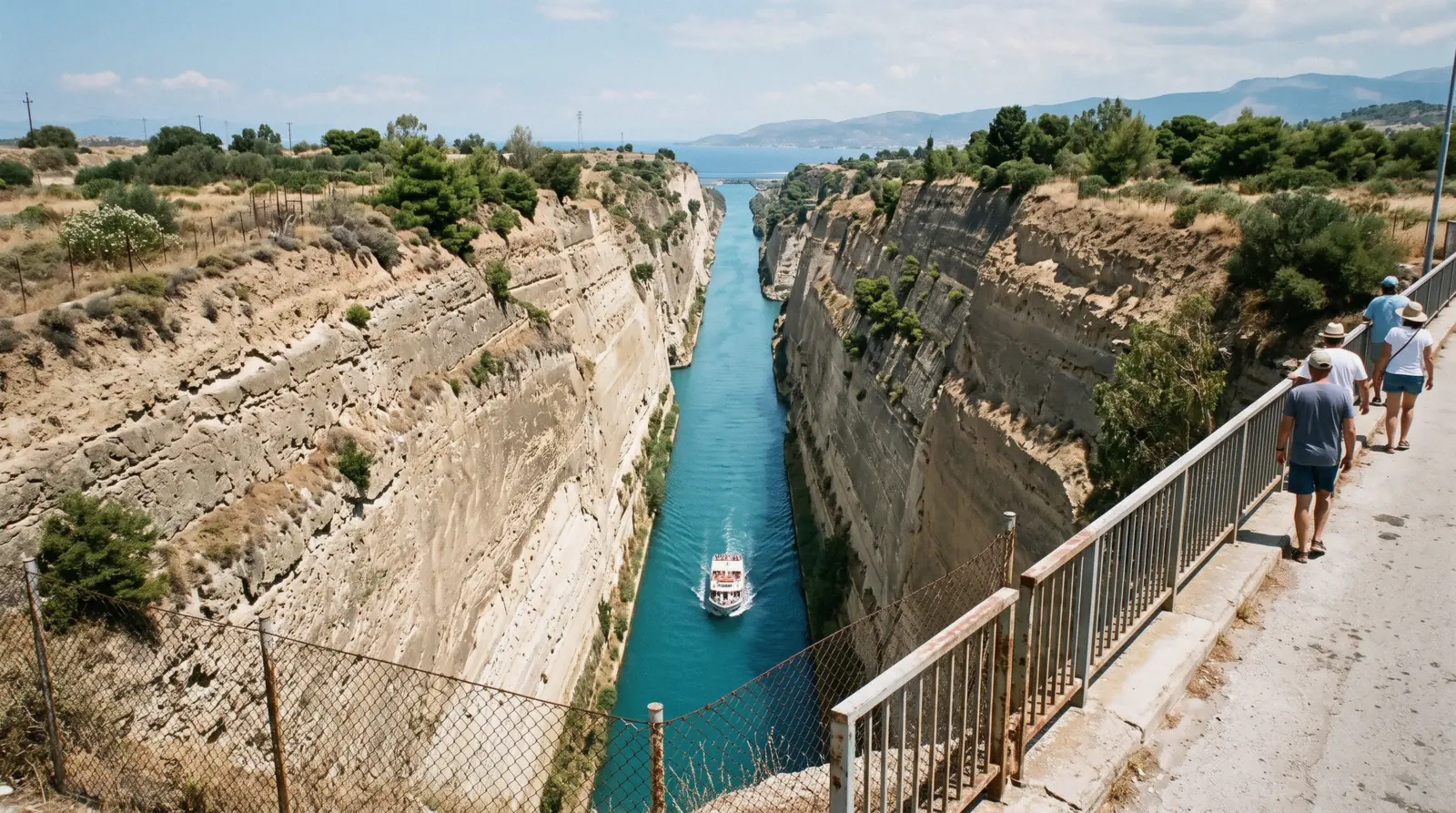
The Corinth Canal
The Corinth Canal is a straight cut 6.4 kilometres long and about 24 metres wide at water level, slicing the isthmus that joins the Peloponnese to the rest of Greece. Nearly every coach heading south stops on the road bridge for ten minutes, and almost nobody plans a trip around it. This page explains what it is, why it is too narrow to matter commercially, and whether it is worth more than the ten minutes. Checked in Q3 2026. The trips it sits on are on the day trips hub, and the wider plan on the Athens city guide homepage.
Quick answer Ten minutes, and whether to make it more
The Corinth Canal is 6.4 kilometres long, about 24 metres wide at the waterline and cut through rock walls that rise some 80 metres above it. It is free to look at from the road bridge, and ten minutes is what most people give it.
Key takeaways
- It is too narrow for modern shipping — why it does not matter commercially is the interesting part of the story.
- Nearly every Peloponnese coach stops here; it is not a destination you book, it is a stop you get. What the stop is explains what to expect.
- Ancient Corinth is fifteen minutes away, costs €15 and is closed on Tuesdays in winter — that is the trip worth extending for.
- The canal took 2,000 years to go from idea to completion; Nero started digging it in AD 67.
- Bungee jumping from the bridge is a thing, and it is not something we sell or price here.
Key facts
Opening hours
| The road bridge viewpoint | any–hour |
|---|---|
| Ancient Corinth, 1 May – 31 Aug | 08:00–20:00 |
| Ancient Corinth, 1 Nov – 31 Mar | 08:30–15:30, closed Tuesdays |
Closed 1 January, 25 March, 1 May, Orthodox Easter Sunday, 25 and 26 December at Ancient Corinth, plus Tuesdays from 1 November to 31 March
Admission
- Adult
- Free at the canal; Ancient Corinth €15
- Reduced
- Ancient Corinth €8
- Free
- 6 March, 18 April, 18 May, the last weekend of September, 28 October, and the first and third Sunday from 1 November to 31 March
Planning it
- Time needed
- Not stated; our routing: ten minutes at the bridge, 45 at Ancient Corinth
- Book ahead
- Optional — walk-up usually fine
- Address
- Isthmia, 201 00 Corinth
The stop, and what is near it
The canal itself is free. This table exists because the trips that stop here usually also pass Ancient Corinth, which is not free and has an unusual closing day. Prices read on 1 September 2026.
| What | Price | Time | Note | Book |
|---|---|---|---|---|
| The canal, from the road bridge | Free | 10 min | No ticket, no hours, a café and a kiosk | Official site |
| Ancient Corinth | €15 (€8) | 45 min | Site and museum; closed Tuesdays, 1 Nov–31 Mar | Official site |
| Argolid day trip | From €24 | 10 h | Usually stops at the canal on the way south | Check Availability |
| Small-group Argolid trip | From €39 | 10 h | Same route, entries often included | Check Availability |
If a trip advertises "Corinth" check which Corinth it means. The canal is a free photo stop; Ancient Corinth is a €15 archaeological site with the Temple of Apollo and the fountain of Peirene in it, and it is a genuinely good hour. They are fifteen minutes apart and are not the same thing.
The trips that pass it
The cards, with the operator's own rating and review count.
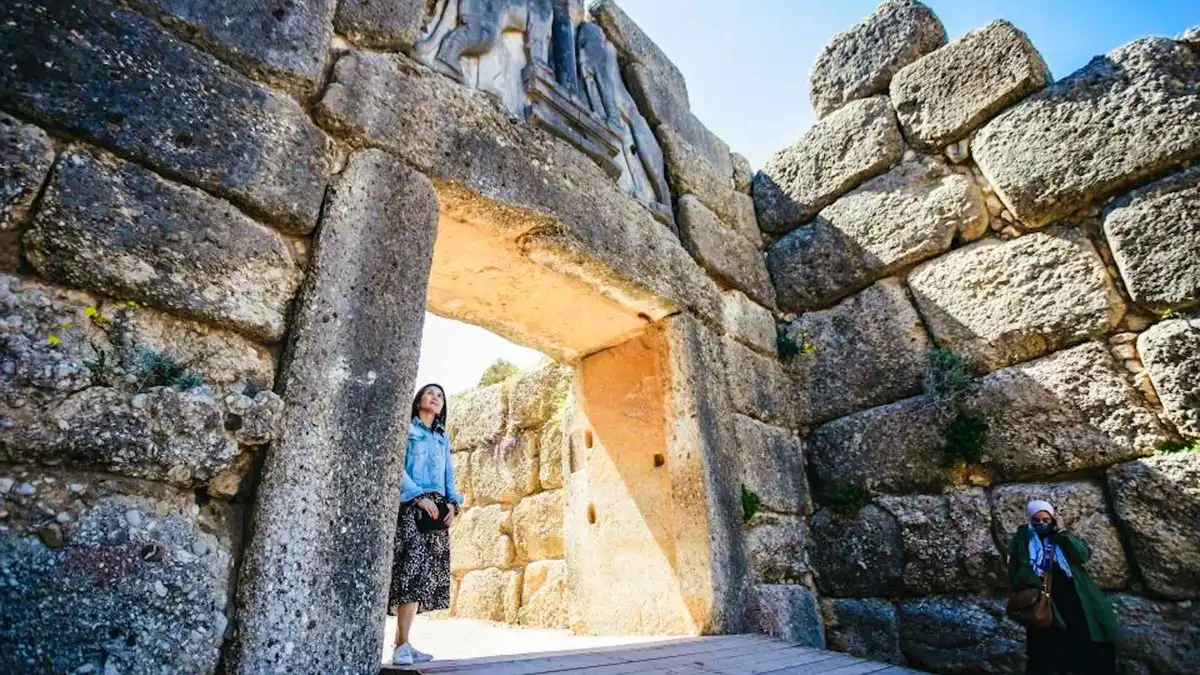 from €24.36
Mycenae, Epidaurus & Nafplio - Journey into Greek Legends
Ten hours through the Argolid: the Lion Gate at Mycenae, the theatre at Epidaurus and an hour in Nafplio.
Check Availability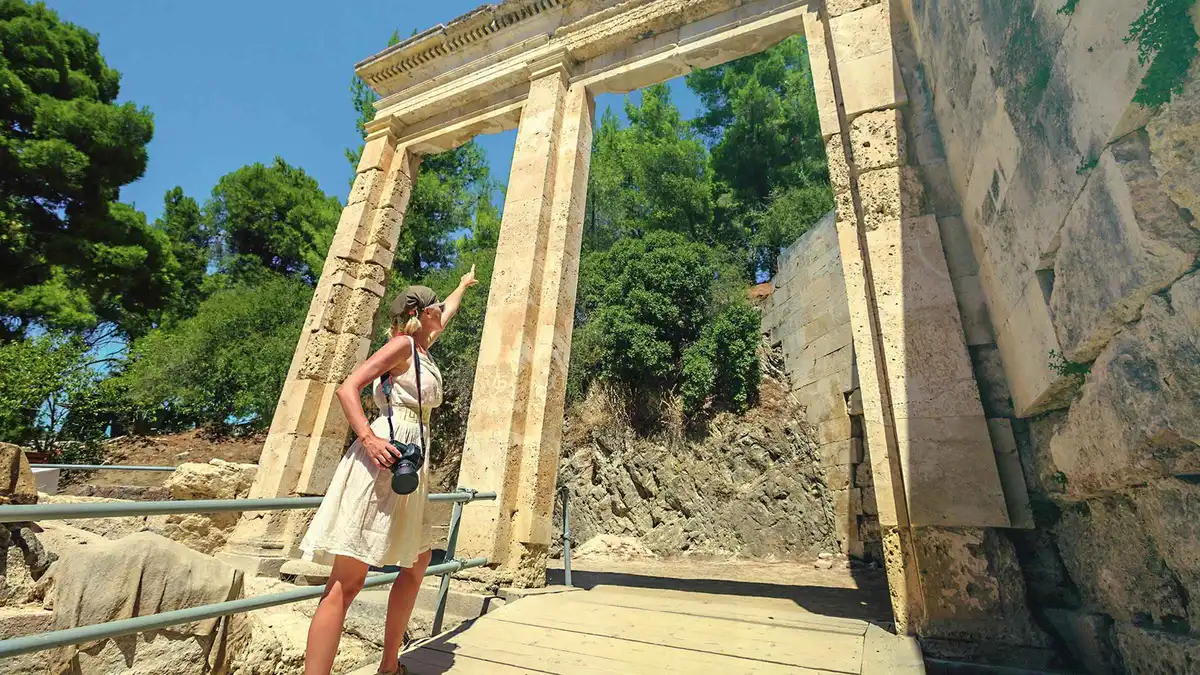 from €39.10
From Athens: Small-Group Mycenae, Epidaurus & Nafplio Trip
The same three stops in a small group, with the acoustics demonstration in the theatre at Epidaurus.
Check AvailabilityPrices, ratings and details are the platform's own, checked in Q3 2026; euro figures are the listed prices — the platform bills in your account's currency.
Why it exists, and why it barely works
Two thousand years of trying, and then it was the wrong width.
The idea, from the seventh century BC
Cutting the isthmus was proposed by the tyrant Periander around 600 BC, and by Demetrius Poliorcetes, Julius Caesar and Caligula after him. Periander instead built the diolkos, a paved trackway on which ships were dragged bodily across the isthmus on wheeled cradles; stretches of it survive beside the modern canal.
Nero's attempt, AD 67
Nero came in person, cut the first sod with a golden pickaxe and set six thousand slaves — many of them Jewish prisoners from Judaea — to dig. Work stopped when he died the following year. Surveys later showed his line was almost exactly where the modern canal runs.
Finished in 1893, obsolete almost at once
A French and then a Greek company finally cut it between 1881 and 1893: 6.4 kilometres, walls up to about 80 metres high, and a width at water level of roughly 24 metres. That width was tight for ships of the 1890s and is hopeless for anything modern. Traffic is a few thousand small vessels a year, mostly tourist and local, and the canal has never repaid its construction.
And the landslides
The soft rock walls slip. The canal has been closed for long stretches for stabilisation work more than once in recent years, and whether it is open to traffic on any given day is not something a guide can tell you in advance. The view from the bridge is unaffected.
Seeing it
From above, from the water, or not at all.
From the road bridge
The old national road crosses the canal at Isthmia and there is parking, a café and a kiosk at the bridge. The view straight down the cut is the photograph, and ten minutes is honestly enough. Coaches cluster here mid-morning on the way south and mid-afternoon on the way back.
The submersible bridges
At each end of the canal the road crosses on bridges that sink beneath the water to let vessels pass, rather than lifting. Watching one submerge is the best thing at the canal and is entirely a matter of luck.
From the water
Small boats run transits through the cut in season, which is a different and better experience than looking down at it — eighty metres of rock either side at close quarters. It is not part of any Athens day trip we list and would need its own arrangement.
Whether to extend the stop
If you are already this far south, Ancient Corinth is fifteen minutes away and worth forty-five: the Temple of Apollo with seven monolithic Doric columns standing, the Roman forum, and the museum, all on a €15 ticket. Just not on a Tuesday between November and March, when it is shut.
Corinth Canal map
The bridge, the canal and the archaeological site nearby.
Where this fits
The trips that pass this way.
Mycenae, Epidaurus and Nafplio
Two €20 gates and the best-preserved theatre in Greece: the Argolid day.
The trip it sits onAncient sites
How the ticketed sites compare on price against time: the ancient sites hub.
For Ancient CorinthCorinth Canal questions
Why is the Corinth Canal famous?
Because it is a straight cut 6.4 kilometres long through solid rock with walls up to about 80 metres high, and because people tried to dig it for two thousand years before anyone managed it. Why it exists has the sequence.
Can cruise ships go through the Corinth Canal?
No. At roughly 24 metres wide at water level it is too narrow for modern commercial shipping and for all but the smallest cruise vessels. Traffic is a few thousand small boats a year, and the canal has never repaid what it cost to dig.
How long did it take to dig?
The modern canal took twelve years, from 1881 to 1893. The idea took about 2,500: Periander proposed it around 600 BC, Nero actually started digging in AD 67 with a golden pickaxe and six thousand slaves, and stopped when he died.
Is the Corinth Canal worth seeing?
As a ten-minute stop on the way to the Peloponnese, yes — it is genuinely startling from above. As a destination you travel to on purpose from Athens, no. Seeing it covers the options.
Is there a charge?
Not to look at it from the road bridge, where there is parking and a café. Ancient Corinth fifteen minutes away is €15 and closed on Tuesdays between November and March.
What are the sinking bridges?
The roads at each end of the canal cross on submersible bridges that sink below the water to let vessels pass rather than lifting out of the way. Watching one go under is the best thing here and entirely a matter of timing.
Reviewed Q3 2026 (July–September 2026); next review Q4 2026. Prices, hours and terms are set by the venue or operator and confirmed at checkout.
We may earn a commission if you book through one of our links, at no extra cost to you. Full affiliate disclosure