 Visit Athens Guide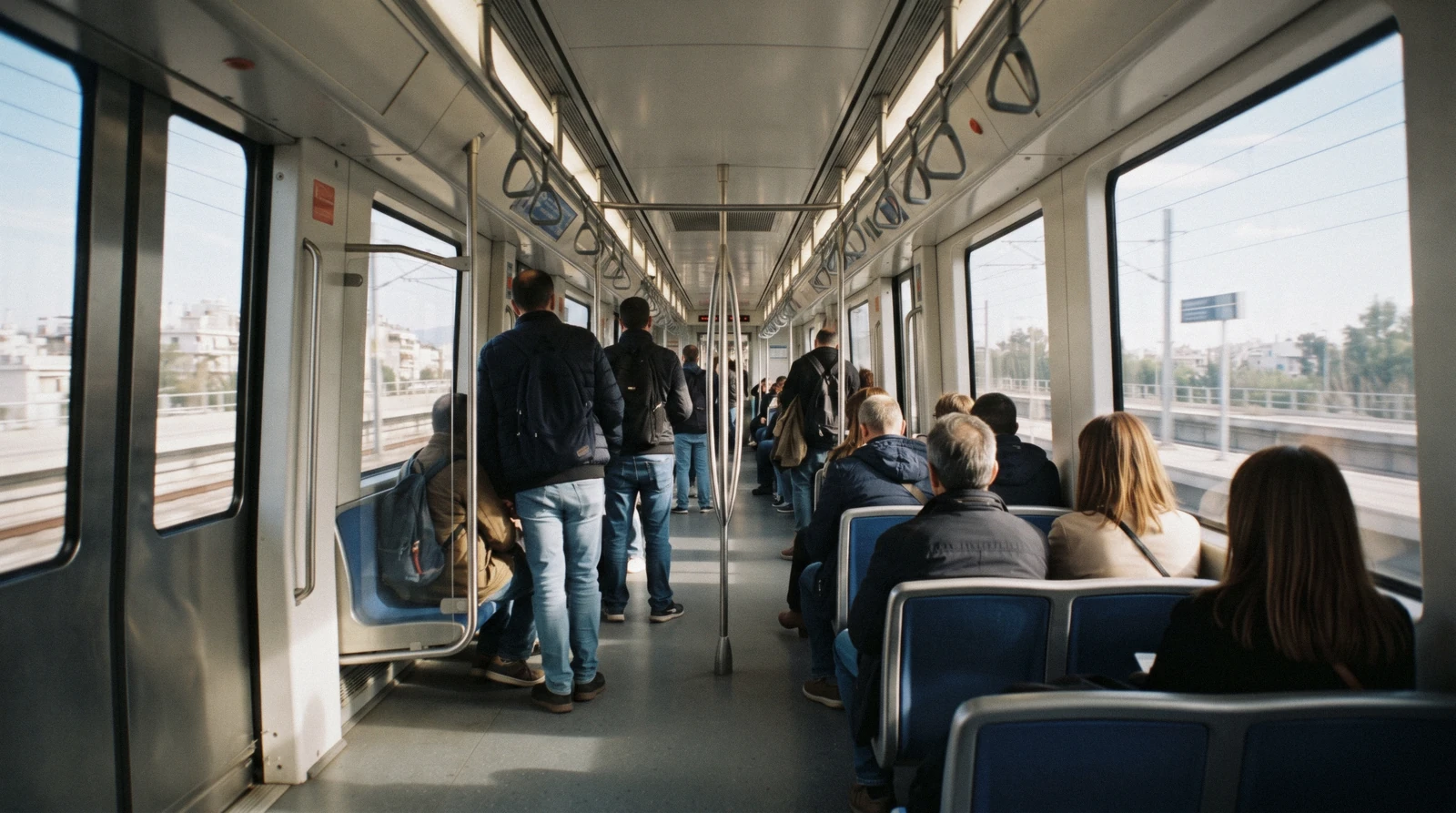
Athens Public Transport: Fares, Lines and the One Ticket That Pays
Athens public transport is simpler than most European capitals and cheaper than all of them: three metro lines, one flat urban fare of €1.20 that covers ninety minutes and every transfer, and a single three-day ticket that quietly pays for itself the moment you use it twice for the airport. Every figure below is from the OASA product list, read in Q3 2026. The airport specifically is on from the airport; the wider plan is on the Athens city guide homepage.
Quick answer What to buy, and whether you need anything at all
A single ticket is €1.20 and runs ninety minutes across metro, bus, trolley and tram with transfers included. A day ticket is €4.10 and a five-day €8.20. The three-day tourist ticket is €20 and includes two airport metro journeys.
Key takeaways
- The three-day ticket is the one that pays: the fare table shows the airport return alone is €16, so €20 for three days of everything plus both airport rides is arithmetic rather than a deal.
- Contactless bank cards work at the gates, so for a short stay you may need no ticket product at all — how to pay covers both.
- The ancient centre is a walk. What not to walk names the two things that are not.
- Airport fares are their own system: from the airport does the arithmetic for one, two and four travellers.
- Strikes stop all of this with a few days' notice — the strikes page explains where notices appear.
Every fare OASA sells
The complete product list, read on oasa.gr on 1 September 2026. "Urban" means metro, bus, trolley and tram inside the city; airport products are separate and marked.
| Product | Full | Reduced | Validity |
|---|---|---|---|
| Single ticket | €1.20 | €0.50 | 90 minutes, all transfers |
| Day ticket | €4.10 | — | 24 hours |
| Five-day ticket | €8.20 | — | 5 × 24 hours |
| Three-day tourist ticket | €20.00 | — | 3 × 24 hours plus two airport metro rides |
| Metro airport ticket | €9.00 | €4.50 | 90 minutes, one way |
| Metro airport return | €16.00 | — | Valid 30 days |
| Airport express bus | €5.50 | €2.70 | One way, round the clock |
| Metro to Pallini, Kantza or Koropi | €5.50 | €2.70 | 90 minutes |
| 30-day pass, urban | €27.00 | €13.50 | Personalised card only |
| 30-day pass with airport | €45.00 | €22.50 | Personalised card only |
Packs bring the single down a little: two for €2.30, five for €5.70, and eleven for €12. But read the fourth row against the sixth. The airport return on its own is €16; the three-day tourist ticket is €20 and adds three days of unlimited urban travel for the other €4. For anyone flying in and out and staying three days or more, it is the only sensible purchase.
When a ticket is not what you need
The passes and tours that bundle transport, with the operator's own rating and review count.
 from €78.90
Athens: City Pass with Acropolis, Museums, HoHo & Transport
The Acropolis, the Acropolis Museum and a 48-hour hop-on hop-off bus in one pass, with public transport and an island cruise as options.
Check Availability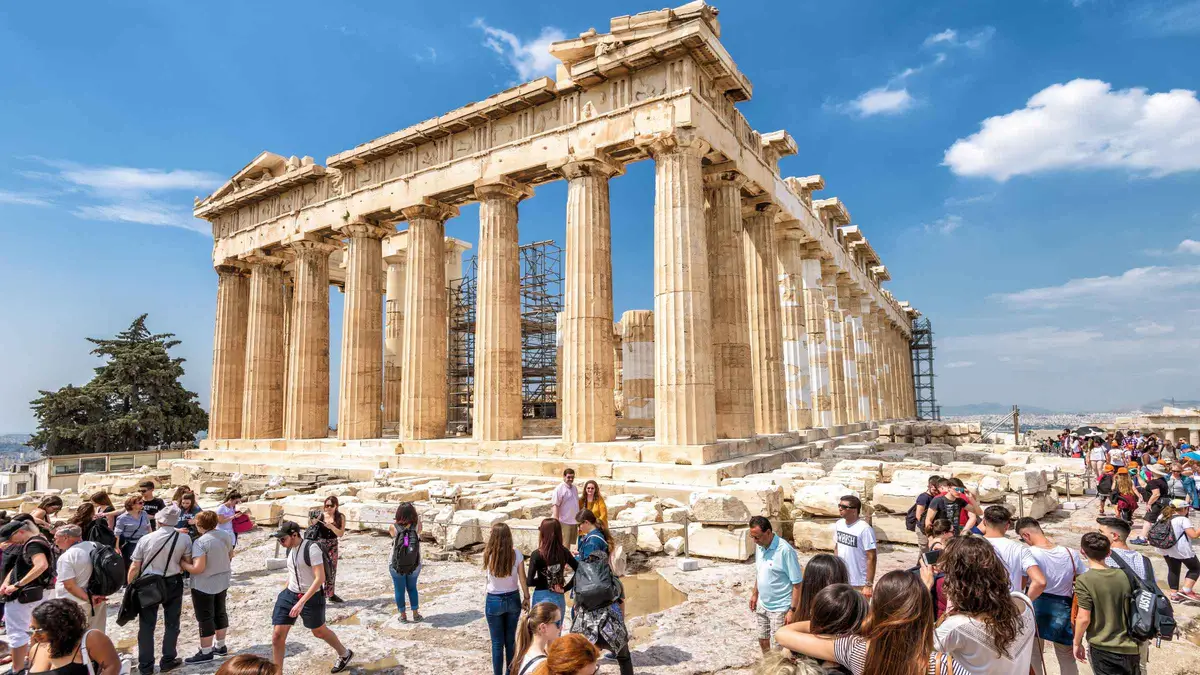 from €36
Athens: Acropolis Ticket with Optional Audio or Live Guide
Pre-booked Acropolis entry sent to your phone, with two audio-guide options and no fixed guide to keep up with. The official price is €30; this is the reseller version of the same timed slot.
Check Availability from €12
Athens: Ferry Boat Ticket to/from Aegina Island
Just the boat: a Piraeus–Aegina ferry ticket by email, 75 minutes each way, so the island day is yours to shape.
Check AvailabilityPrices, ratings and details are the platform's own, checked in Q3 2026; euro figures are the listed prices — the platform bills in your account's currency.
How to pay
Three ways, and one of them means buying nothing.
Contactless bank card
Visa, Mastercard, Apple Pay and Google Pay work at the metro gates and on board, charging the single fare. For a two-day trip with three or four journeys that is the simplest thing to do, and it needs no queue and no machine. Use the same card and the same device for every tap.
The Ath.ena ticket and the Ath.ena card
The paper Ath.ena ticket is an anonymous rechargeable card sold at machines and kiosks; the Ath.ena card is the personalised version with a photo, which you need for the monthly passes and which can be replaced if lost. Load whichever product from the table above onto it.
Validate, every time
Tap in at the metro gates and validate on board buses, trolleys and trams — the ninety minutes runs from the first validation, not from purchase. Inspections happen, and the penalty for an unvalidated ticket is not small.
The network, in one page
Three metro lines, and everything else is filling in.
Metro Line 1, the green one
Piraeus to Kifissia, the oldest line in the city and mostly above ground. For a visitor it is the one to Monastiraki, Thiseio and Piraeus. It is also the slowest and the most crowded.
Metro Line 2, the red one
Anthoupoli to Elliniko, through Omonia, Syntagma and Akropoli — the station for the Acropolis south entrance and the Acropolis Museum. Also Syngrou-Fix for Koukaki.
Metro Line 3, the blue one
The airport line: from the terminal through Syntagma and Monastiraki and on to Piraeus "Dimotiko Theatro" without a change. Also Evangelismos for the Kolonaki museums. This is the line that matters most on arrival and departure.
Buses, trolleys and the tram
Dense, cheap and largely unnecessary inside the historic centre. The tram runs south to the coast at Glyfada, which is what you want on a beach afternoon. Buses matter for the airport express lines and for reaching the Panathenaic Stadium if the walk through the garden does not appeal.
Antiquities in the stations
Syntagma, Monastiraki and Akropoli stations display the excavations turned up while they were dug — a cemetery, a river bed, a Roman bath — behind glass on the platforms. Syntagma's is the best and it costs nothing to look at while you wait.
What to walk, and what not to
Most of a first Athens trip is a walk, which is why the fares above matter less than they look.
The walk that does most of the work
Dionysiou Areopagitou is pedestrianised and links the Acropolis Museum, the south slope, the site entrance and Thiseio in one flat twenty minutes with no road crossing. From Thiseio you continue on Apostolou Pavlou to the Ancient Agora and Monastiraki. That single route covers most of what a visitor came for.
Rough distances
Syntagma to the Acropolis south gate is about twenty minutes; Monastiraki to the Acropolis about fifteen; the Acropolis Museum to Plaka about nine; Monastiraki to the National Archaeological Museum about twenty-five. Nothing in the historic centre needs the metro.
What is not a walk
Lycabettus, which is a real climb or a funicular; Piraeus, which is Line 1 or Line 3; and the airport. Also the National Archaeological Museum in August, when twenty-five minutes on hot pavement is worth €1.20 to avoid.
Surfaces
Plaka is stepped and its marble is slippery in rain; the Acropolis itself is polished rock. Flat soles matter more here than in most cities, and a suitcase on the Plaka lanes is a genuine problem — where to stay flags which districts that affects.
Athens transport questions
How can I pay for public transport in Athens?
With a contactless bank card or phone at the gates, or by loading a product onto an Ath.ena ticket or card. How to pay covers all three, and validation is required either way.
How much is a metro ticket in Athens?
€1.20 for ninety minutes with every transfer included, or €0.50 reduced. A day ticket is €4.10 and a five-day €8.20. Airport journeys are priced separately at €9 one way. The fare table has every product.
Is the three-day tourist ticket worth it?
If you are flying in and out and staying three days or more, yes — it is €20 and includes two airport metro rides, which alone cost €16 as a return. That leaves €4 for three days of unlimited urban travel.
Does Athens have good public transport?
The metro is clean, frequent and cheap, and three lines cover everything a visitor needs. Buses are dense and harder to use without Greek. The bigger point is that the historic centre does not need any of it — what to walk has the distances.
How do tourists get around Athens?
Mostly on foot in the centre, and on Line 2 or Line 3 for the airport, Piraeus and the Kolonaki museums. A taxi is regulated and reasonable but rarely faster than the metro in traffic.
What happens during a strike?
Metro, buses and ferries can stop with a few days' notice, and the calendar is published only in Greek. The strikes page explains where to look and what to do about a booked ticket.
Where to go from here
The pages this one feeds.
Reviewed Q3 2026 (July–September 2026); next review Q4 2026. Prices, hours and terms are set by the venue or operator and confirmed at checkout.
We may earn a commission if you book through one of our links, at no extra cost to you. Full affiliate disclosure